| © Copyright Robert Cole 2015
- No copying or distributing - BIZEN |


|
|
| OSAFUNE KAGEMITSU School
KAGEMITSU brought the leaning
KATAOCHI "Stooped Shoulders" GUNOME-CHOJI MIDARE
BA. _________ NAGAMITSU SHO-O 1288 |_______________ ___________ ______________________ __|______ ___|_____ ___|____ __|_______ KAGEMITSU(1) NAGACHIKA KAGEMASA BUN-PO 1317 SHIGEMITSU(1) | - GEN-KYO 1321 - ___|_____ | O-CHO 1311 | CHIKAKAGE(1) GEN-O 1319 __|______ | ___________ __________|______________ NAGAMITSU(3) | ___|____ ____|____ ___|_____ ____|____ | HIDEKAGE CHIKAMUNE CHIKAKAGE(2) YOSHIKAGE(1) KEM-MU 1334 | ___|_____ - TEI-WA 1345 - |_______________ | SHIGEHIDE __________|____ _____|___ | MEI-TOKU 1390 KOZORI IYESHIGE YOSHIKANE | KO-RYAKU 1379 MEI-TOKU 1390 | | - 5 Sons - |_____________ _______________ ____________ __________ _______ __|______ _____|____ ______|____ _____|___ _____|___ | KAGEMITSU SHIGEMITSU(2) O-KANEMITSU TOMOMITSU YOSHIKAGE(1) | __|______ See KANEMITSU SODEN | KAGEMITSU(3) O-AN 1368 | OSAFUNE KAGEMITSU |
 Kagemitsu
- 64.6cm
|
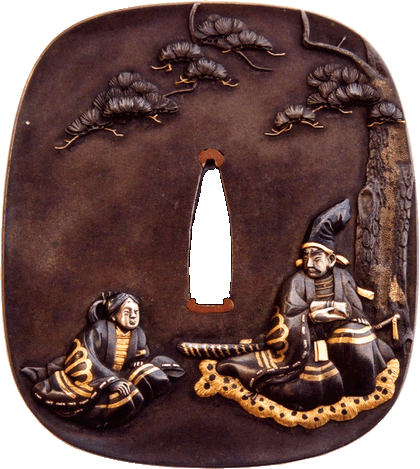
GODAIGO's Dream
                                             View Lay-out Version pdf
|
| He dreamt a KUSUNOKI
"Camphor Tree" had provided shelter.
This story begins with the 500 warriors that rallied under the vision of one SAMURAI, a vision only seen through squinting eyes. |
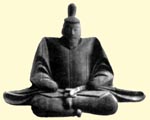 Godaigo-Sama |
That they
few might prevail - against the vast architecture
of HOJO power;
KUSUNOKI MASASHIGE accepted the appeal for assistance from GODAIGO, who had fled KYOTO to Mt. KASAGI on the YAMATO border. The HOJO BAKUFU, chasing GODAIGO, had attacked the wrong Temple, which then helped clarify sides. It was the warrior-monks, scattered Imperialists and their Emperor running amok in the mountains. MASASHIGE stretched his gambit with creative warfare. He built AKASAKA in KAWACHI and defended it with hidden flank attacks, huge rolling logs and the liberal use of boiling pitch and water. On the last night, sneaking off small groups, he buffaloed the entire HOJO force by leaving a gigantic and dramatically set funeral pyre with one sobbing attendant claiming the great KUSUNOKI Clan had found their destiny with mass suicide. Earning the empathy of all, the aghast HOJO army - let the sobber go. The HOJO settled up by taking Mt. KASAGI and GODAIGO with it. He was exiled to GOTOBA's OKI Island - but escaped in the year on a fishing boat, secreted under seaweed. MASASHIGE had by then built the unconquerable CHIHAYA Castle, and his vision now stood out for the imagination of all. With great resources tied up at CHIHAYA, the BAKUFU sent their general, ASHIKAGA TAKAUJI to attack GODAIGO directly. TAKAUJI, with MINAMOTO blood, saw a greedy chance. If he reversed sides and supported the Emperor, he might then finagle himself a new SHOGUNATE. |
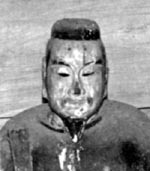 Nitta Yoshisada |
- So he
switched sides. With TAKAUJI's army gone over, and
the engaged forces at CHIHAYA, a new player from
KOZUKE, NITTA YOSHISADA, takes the field for the
South against the suddenly vulnerable KAMAKURA
capitol itself.
A BAKUFU veteran of AKASAKA, YOSHISADA had been convinced of the Imperial cause by GODAIGOs' son, Prince MORINAGA. |
| After impregnable resistance
in the hills, YOSHISADA threw his TACHI into the sea
in a crazed appeal to "The Divine Goddess of the
Sun," AMATERASU, who withdrew the tide allowing his
successful approach from the beach.
The 9th and last KAMAKURA SHIKKEN, HOJO TAKATOKI with all his stable committed SEPPUKU, MAY 22, 1333. |
|
 |
The Imperial Restoration was complete. A new era was dawning. MASASHIGE was awarded KAWACHI-no-KAMI, and the provinces of SETTSU, KAWACHI and IZUMI. YOSHISADA became HARIMA-no-KAMI with KOZUKE and HARIMA as fief. TAKAUJI received MUSASHI, SHIMOSA and HITACHI. But, of course, the ex-HOJO General ASHIKAGA TAKAUJI, whose mother was HOJO, was there to be SHOGUN. He was HOJO blood but would never have held HOJO power. He had forsaken them in a gamble to attain the SHOGUNATE, but the position was now given GODAIGOs' son, Prince MORINAGA. TAKAUJI's SHOGUNAL design, however, would soon find its full expression. |
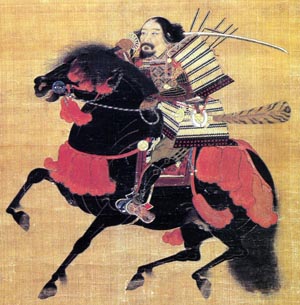 Ashikaga Takauji See Takauji's sword |
| HOJO TAKATOKIs' son,
TOKIYUKI, raised troops in SHINANO the following
year and retook KAMAKURA under the HOJO banner.
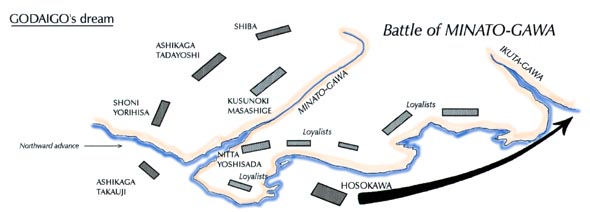
GODAIGO sent his general, ASHIKAGA TAKAUJI who destroyed this last HOJO, but once in KAMAKURA pronounced himself SHOGUN and distributed land to his generals. Branded a traitor, NITTA YOSHISADA was sent against him. After two wins, YOSHISADA's forces were routed on HAKONE Road and TAKAUJI marched on KYOTO, defeating MASASHIGE on the ancient battle ground at UJI. - GODAIGO was forced to flee to the YAMATO hills, once again. Young KITABATAKE AKIIYE whose family held DEWA and MUTSU for the Southern cause, joined the monks of ENRYAKU-JI and defeated the ASHIKAGA in OMI and, uniting with YOSHISADA and MASASHIGE, expelled TAKAUJI from KYOTO allowing Emperor GODAIGO a triumphant return. Driven south, TAKAUJI then assembled a new army in KYUSHU and advanced north for a final show down with Imperial forces. YOSHISADA's army withdrew northward along the ASHIKAGA advance. At council, MASASHIGE's plan to trap TAKAUJI in an evacuated KYOTO was rejected by the Emperor. YOSHISADA and MASASHIGE were then bound to meet TAKAUJI on the HYOGO plain just inside SETTSU |
|
It was
summer
The HOSOKAWA attacked from the sea but were driven back. While the SHONI engaged YOSHISADA at the river, the HOSOKAWA made a landing at IKUTA, 4 miles up and advanced on his rear, - forcing retreat. |
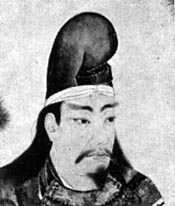 Kusunoki Masashige |
MASASHIGE stood
off the SHIBA and TADAYOSHI, but soon received
pressure on the left from TAKAUJI, and the HOSOKAWA
coming across the river on his back.
KUSUNOKI MASASHIGE received eleven wounds before taking his SEPPUKU, in that afternoon heat, July 5, 1336. He is honored as one of the greatest heroes in all of Japanese history for his noble and selfless support of the Imperial cause. The NANKO-SAN Temple was erected for him where he died. |
| 1348:KUSUNOKI and the Imperial Cause
MASASHIGEs' son, KUSUNOKI MASATSURA rose to take the leadership of his clan and fought the ASHIKAGA, driving the HOSOKAWA and their re-enforcements from KAWACHI. In response, TAKAUJI sent the KO brothers, MORONAO (who had destroyed KITABATAKE AKIIYE ten years before in 1338) and MOROYASU, with 60,000 men. |
| MASATSURA
withdrew from the first encounter to YOSHINO. There,
he was received by the 21 year old new Emperor,
GOMURAKAMI-SAMA, who impressed his protector with
the supreme gratitude for the KUSUNOKI family's
Imperial bargain and the Emperor's great personal
confidence.
With his men, he visited the tomb of GODAIGO-TENNO before taking leave to battle. He cut his farewell poem into the door of the NYOIRIN-JI Temple - with the point of an arrow:
|
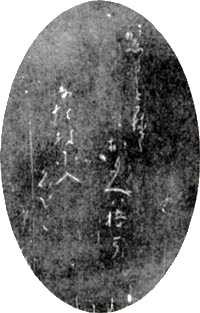 Last poem at NYOIRIN-JI |
| KUSUNOKI MASATSURA, his
brother MASATOKI and cousin WADA TAKAHIDE died with
all their partisans at SHIJO-NAWATE defending the
Imperial cause.
He was 22. The SHIJO-NAWATE JINJA, at the foot of nearby Mt. IIMORI, commemorates him. |
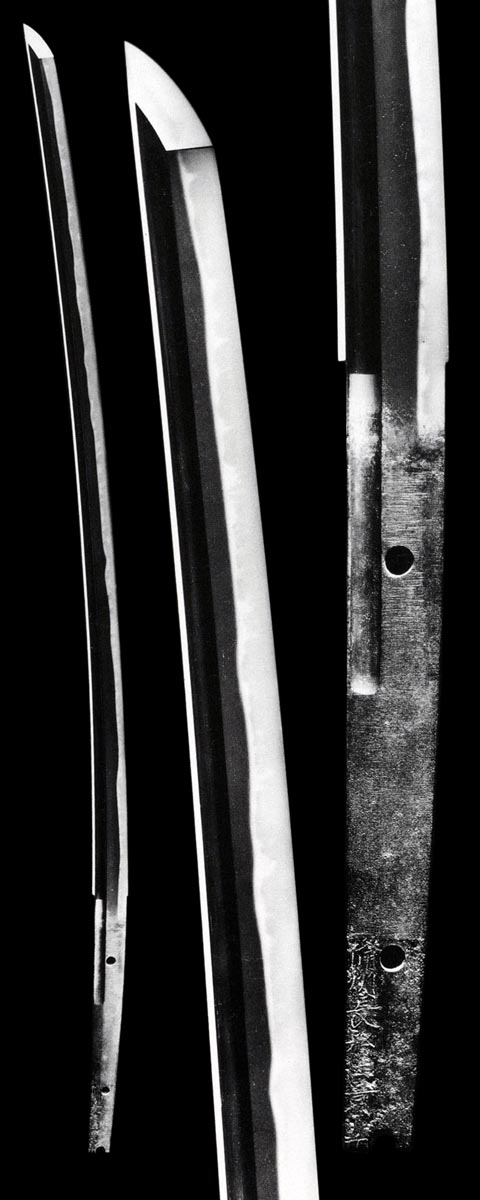
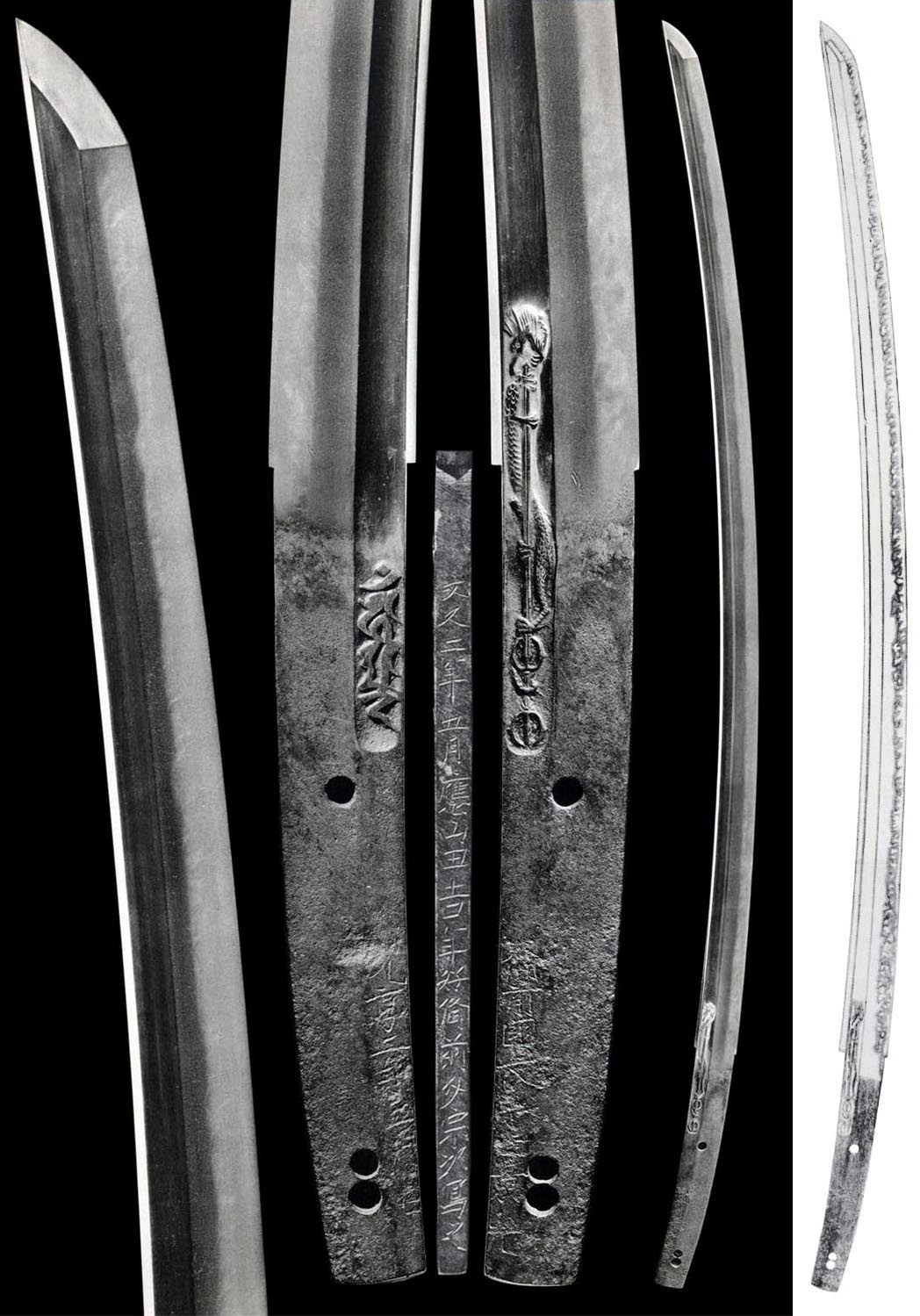 KOKUHO KO-RYU "Little Dragon" KAGEMITSU Kokuho NAGASA: 2 SHAKU 4.3 SUN SORI: 1 SUN MOTO-HABA: 1 SUN SAKI-HABA: 6.6 BU NAKAGO: 5.8 SUN A special history to a special sword made this piece a coveted favorite of Emperor MEIJI. This was the HAITO or personal sword, made in 1322, of KUSUNOKI MASASHIGE, the epitome of resolute commitment for the legitimate Imperial line. See Emperor GO-DAIGO and KUSUNOKI MASASHIGE - The Death of KAMAKURA, preceding. SHINOGI-TSUKURI, IHORI-MUNE, IKUBI CHU-KISSAKI, strong late-KAMAKURA TACHI. A small, 3.2 SUN SANKO-TSUKA KEN KURIKARA and KEN, Dragon HORIMONO in the OMOTE-side HABAKI-MOTO, MARU-DOME BO-HI inspired the fond reference of "Little Dragon" for this sword. A BONJI resides on the URA. KO-MOKUME HADA has standing MIDARE-UTSURI. Wide, gently undulating HIRO-width YAKIBA occupies most of the JI. Its continually leaning, complex and compact KO-GUNOME KO-CHOJI BA seems to pile upon itself. ASHI and swelling YO intermingle as NIOI-FUKASHI forces inner-patterns of crushed and crowded OBUSA to crumble in the lower and run together. The pattern becomes less severe in the MONOUCHI and walks widely into the KISSAKI. A few KO-ASHI sieve from the line before KO-MARU head. The three MEKUGI-ANA SURIAGE NAKAGO has been shortened approximately 2 SUN. TACHI-MEI: BIZEN-no-KUNI OSAFUNE JU KAGEMITSU URA: GEN-KYO NI-NEN GO GATSU |
Or View Lay-out pdf
Kagemitsu
Tachi - Kokuho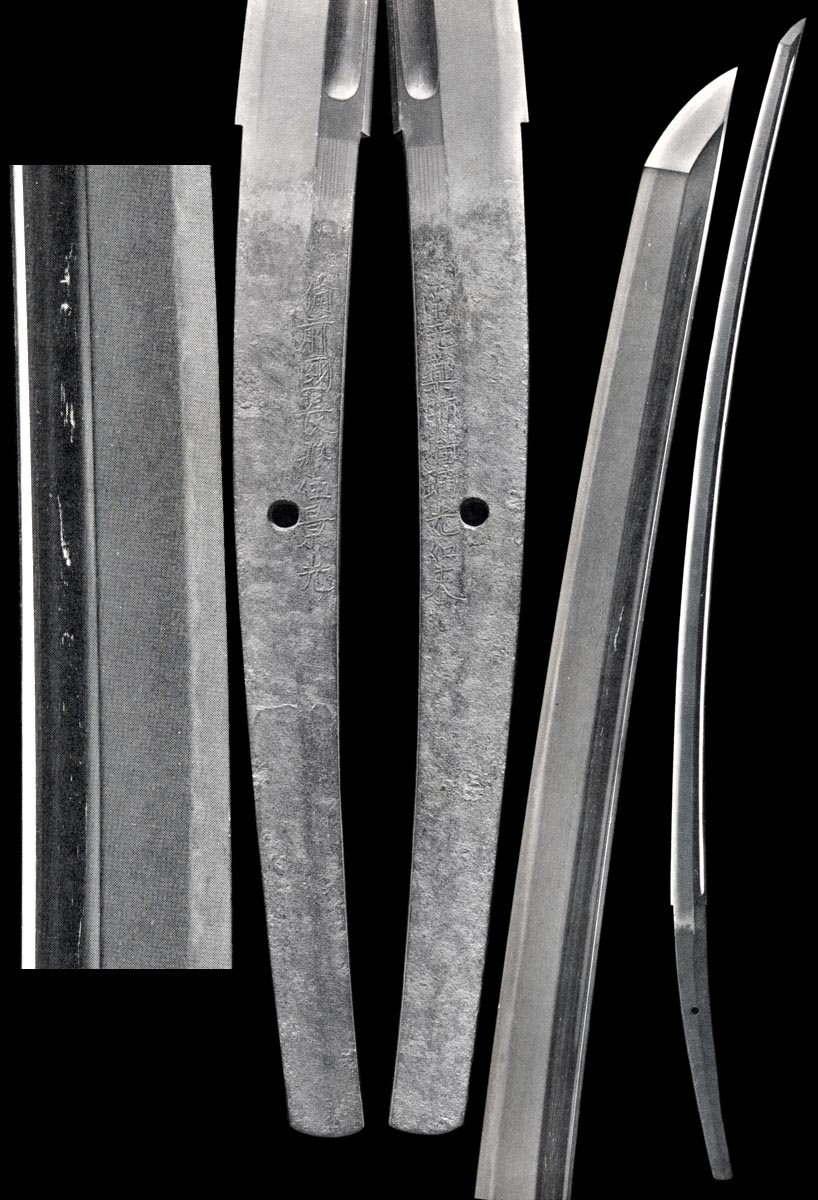 Kagemitsu Tachi - Kokuho Nagasa: 77.3cm Moto-haba: 3.1cm Shinogi-Tsukuri, Ihori-Mune, Koshizori Funbari Tachi. Bo-Hi both sides to Maru-Dome. Ko-Itame Hada has standing Midare-Utsuri. Nioi-Deki Sugu holds Ko-Gunome Choji-Midare Ba with Ashi-iri. Sungashi and Kinsuji reach between figures. Tight Nioi Notare-Komi Boshi. Ubu Kurijiri Nakago has one Mekugi-ana. Ura-Mei: Bizen-no-Kuni Osafune Ju Kagemitsu Nambu Yakushi Ruri Ko Nyorai |
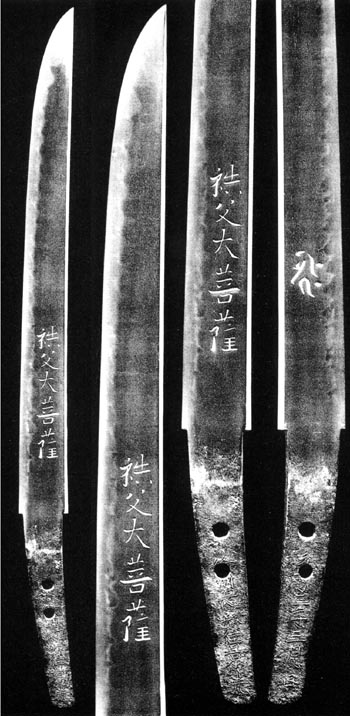
KOKUHO KAGEMITSU
|
 |
|